
Malawi fuel crisis worsens as government acknowledges empty reserves and cash shortage
Malawi’s government has publicly admitted that the country’s fuel reserves are exhausted and that a foreign currency shortage is preventing new purchases, with the crisis deepening at a moment when global fuel prices are already elevated by Middle East tensions.
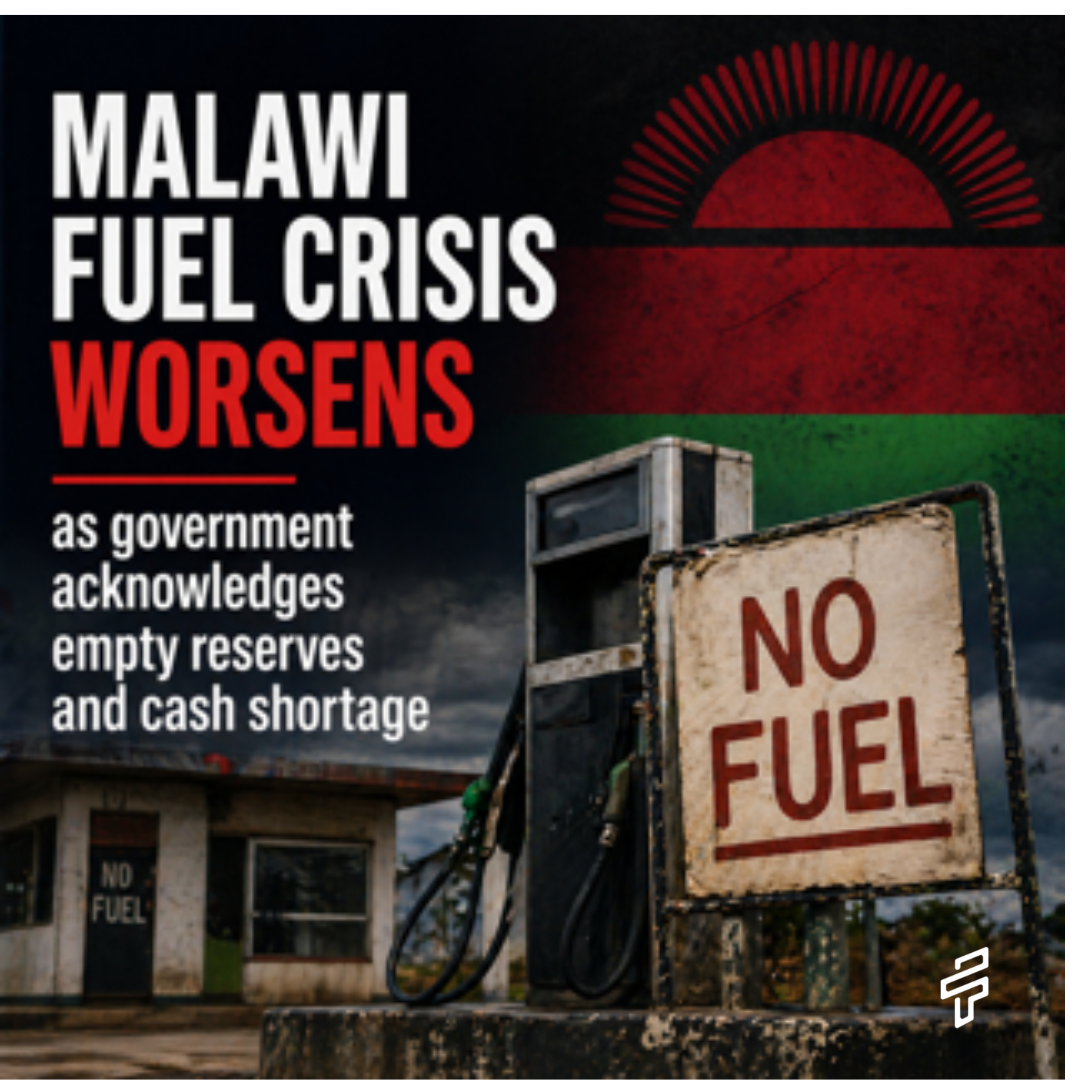
Malawi’s government has said the country’s fuel reserves are exhausted as a shortage of foreign exchange blocks new imports, deepening a crisis that is already disrupting transport and business.
Government spokesperson Shadric Namalomba said the state has no foreign currency to pay importers and is now considering emergency borrowing to secure supplies. Xinhua reported that Lilongwe is weighing a $120 million loan from Afreximbank to buy fuel.
The shortage comes as global oil prices remain elevated and Middle East supply disruptions have tightened markets, adding pressure to Malawi’s already fragile balance of payments. The country has long relied on tobacco and other agricultural exports for foreign exchange, but earnings have not kept pace with import demand.
Fuel shortages in Malawi typically spread quickly through the economy, raising transport costs, pushing up food prices and affecting agriculture and public services. Long queues have already returned at fuel stations, according to local reports.
The government is under an IMF programme, which means any emergency fuel procurement plan will likely need to be aligned with the Fund and other lenders. Officials have not yet disclosed a full response strategy.