
Sonko’s New Pragmatism Shows Senegal’s Debt Crisis Is Reshaping Politics
Ousmane Sonko’s softer line on debt restructuring suggests that Senegal’s political confrontation is beginning to bend under the weight of economic reality.
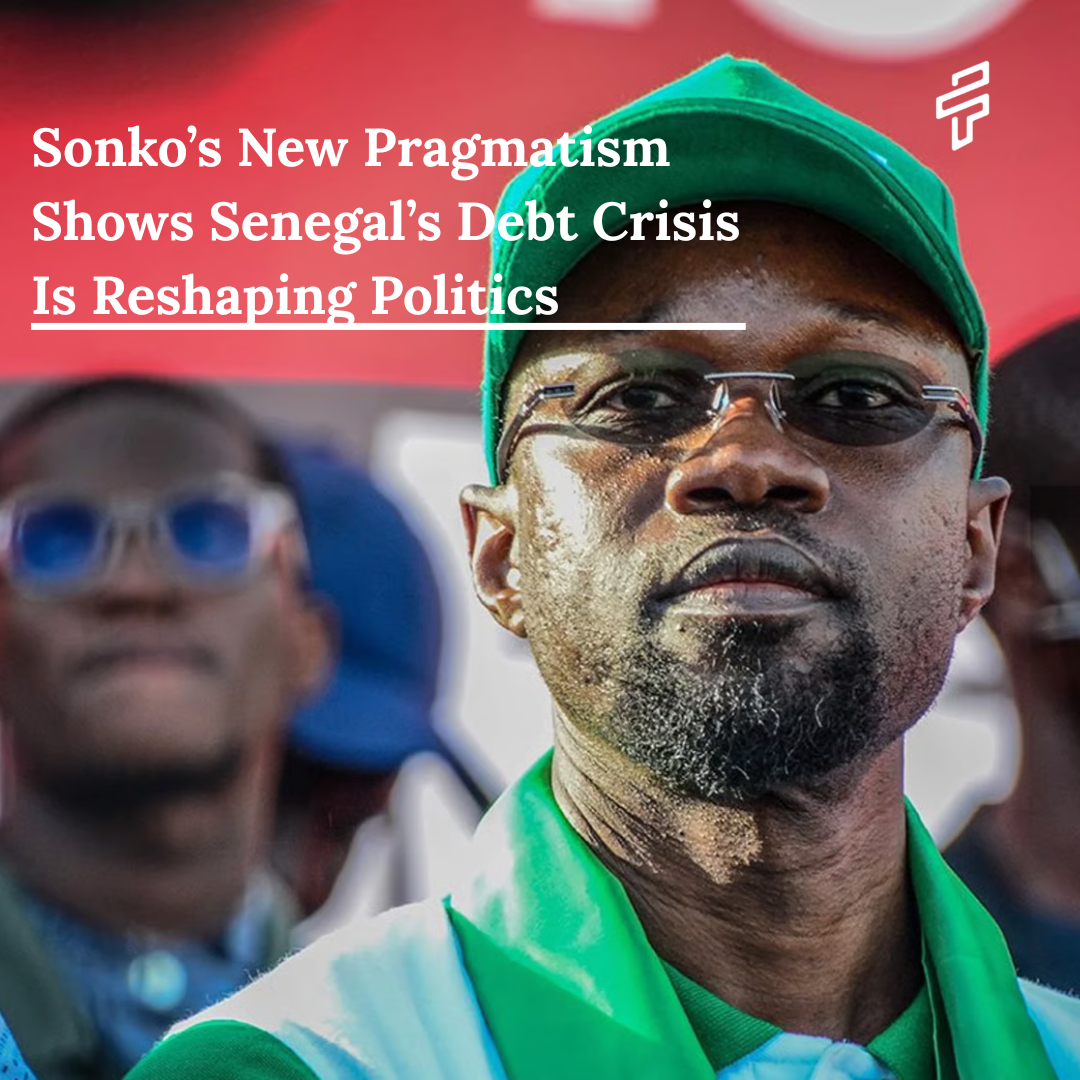
Ousmane Sonko, recently removed as prime minister but now speaker of Senegal’s National Assembly, has adopted a more flexible tone on debt restructuring ahead of expected talks with the International Monetary Fund. In an interview cited by Reuters, Sonko said he did not hold “rigid positions” and would approach the issue pragmatically, a notable shift from earlier rhetoric that treated IMF-led restructuring with suspicion.
This matters because Senegal’s debt crisis has become the defining constraint on the country’s politics. The discovery of hidden liabilities under the previous administration shook fiscal credibility and froze an IMF programme. Since then, President Bassirou Diomaye Faye’s administration has had to balance a reformist political mandate with the hard requirements of financial stabilisation. Sonko’s new tone suggests that even the movement’s more combative wing understands that ideology alone cannot close a fiscal gap.
The political implication is important. Senegal’s internal power struggle has often been framed as a battle over authority between Faye and Sonko. But debt is now forcing a second question: who is prepared to take responsibility for governing a stressed economy? Pragmatism may not resolve the rivalry, but it narrows the space for grandstanding.
If Sonko continues in this direction, Senegal’s political debate may become less about rejecting external constraints outright and more about negotiating them on better terms. That would be a meaningful shift in tone, even if the structural problem remains severe.