
Somaliland’s Jerusalem Embassy Plan Pushes Recognition Politics Into the Middle East
Somaliland’s planned embassy in Jerusalem follows Israeli recognition and deepens a diplomatic rupture with Somalia over sovereignty, recognition and regional alignment.

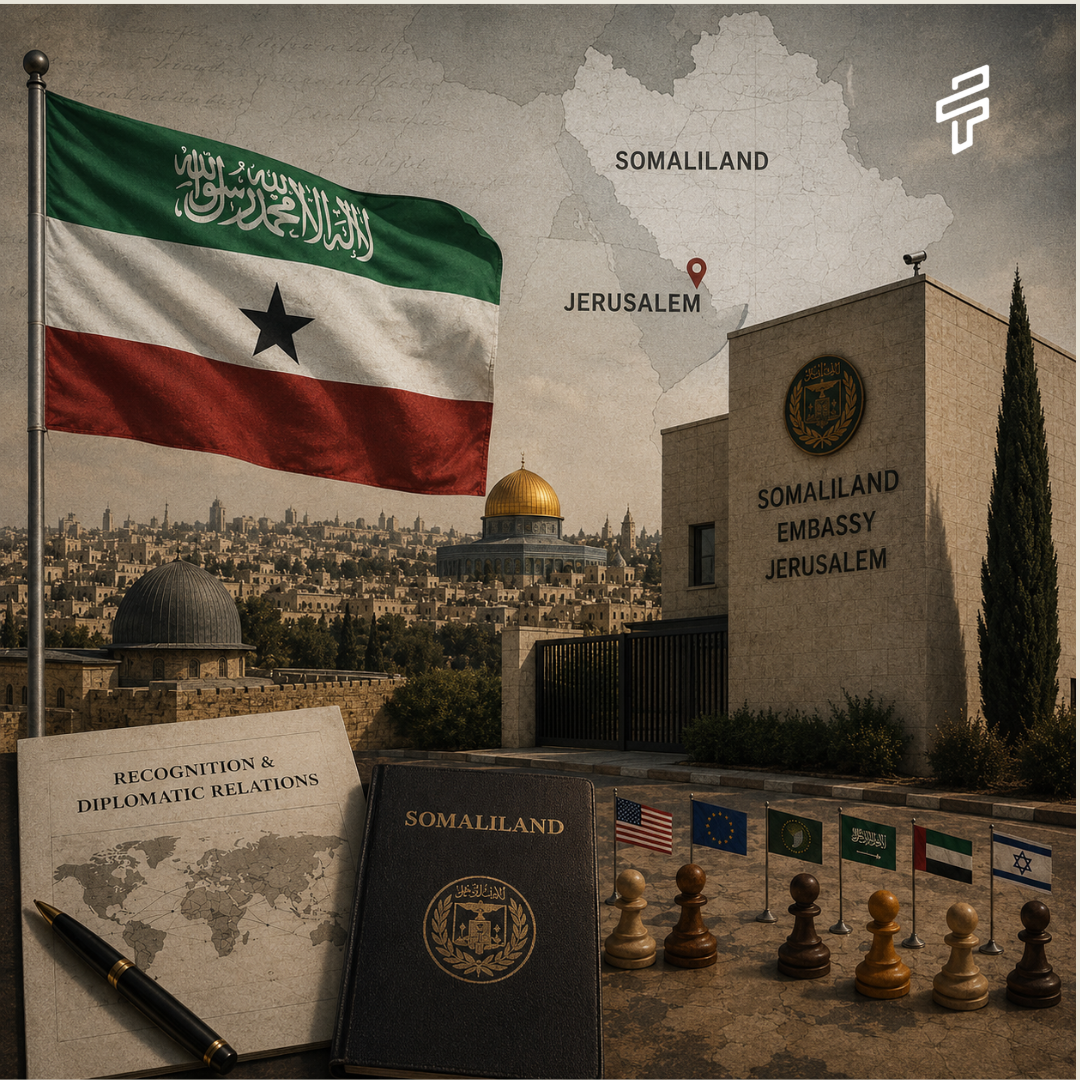
Somaliland says it will open an embassy in Jerusalem after Israel became the first country to formally recognise the self-declared republic. Somaliland’s ambassador said Israel is expected to reciprocate by opening an embassy in Hargeisa.
The move is diplomatically significant because Somaliland has operated with de facto autonomy since 1991, when Somalia collapsed into civil war, but had not received formal recognition from another country until Israel’s decision in December. Somalia rejected that recognition as a deliberate attack on its sovereignty.
For Somaliland, an embassy in Jerusalem would be more than a diplomatic office. It would be a statement that Hargeisa is willing to align with partners prepared to treat it as a sovereign actor. That matters because recognition has been the core of Somaliland’s international strategy for more than three decades.
For Somalia, the move deepens a sovereignty challenge at a time when Mogadishu is already managing internal political tension, security threats from al-Shabaab and complex relations with neighbouring states. The more external actors engage Somaliland as a state, the harder Somalia’s non-recognition position becomes to enforce.
The Jerusalem dimension adds another layer. Diplomatic missions in Jerusalem carry symbolic weight because of the city’s contested status. Somaliland’s decision therefore links Horn of Africa recognition politics to one of the Middle East’s most sensitive diplomatic questions.
The wider regional consequences are uncertain. Some countries may see Israel’s move as opening space for a new recognition debate. Others may resist it to avoid destabilising Somalia’s territorial claim or complicating relations with the African Union, which has historically been cautious about redrawing inherited colonial borders.
Somaliland has long argued that its stability, elections and institutions justify recognition. Israel’s decision gives that argument new momentum. But it also ensures that the recognition question will become more politically charged, not less.