
Congo’s Ebola Outbreak Becomes a Regional Test as Cases Spread to Uganda
A severe Ebola outbreak in the DRC has killed at least 130 people and spread to Uganda, with WHO officials warning that limited testing is slowing the response.
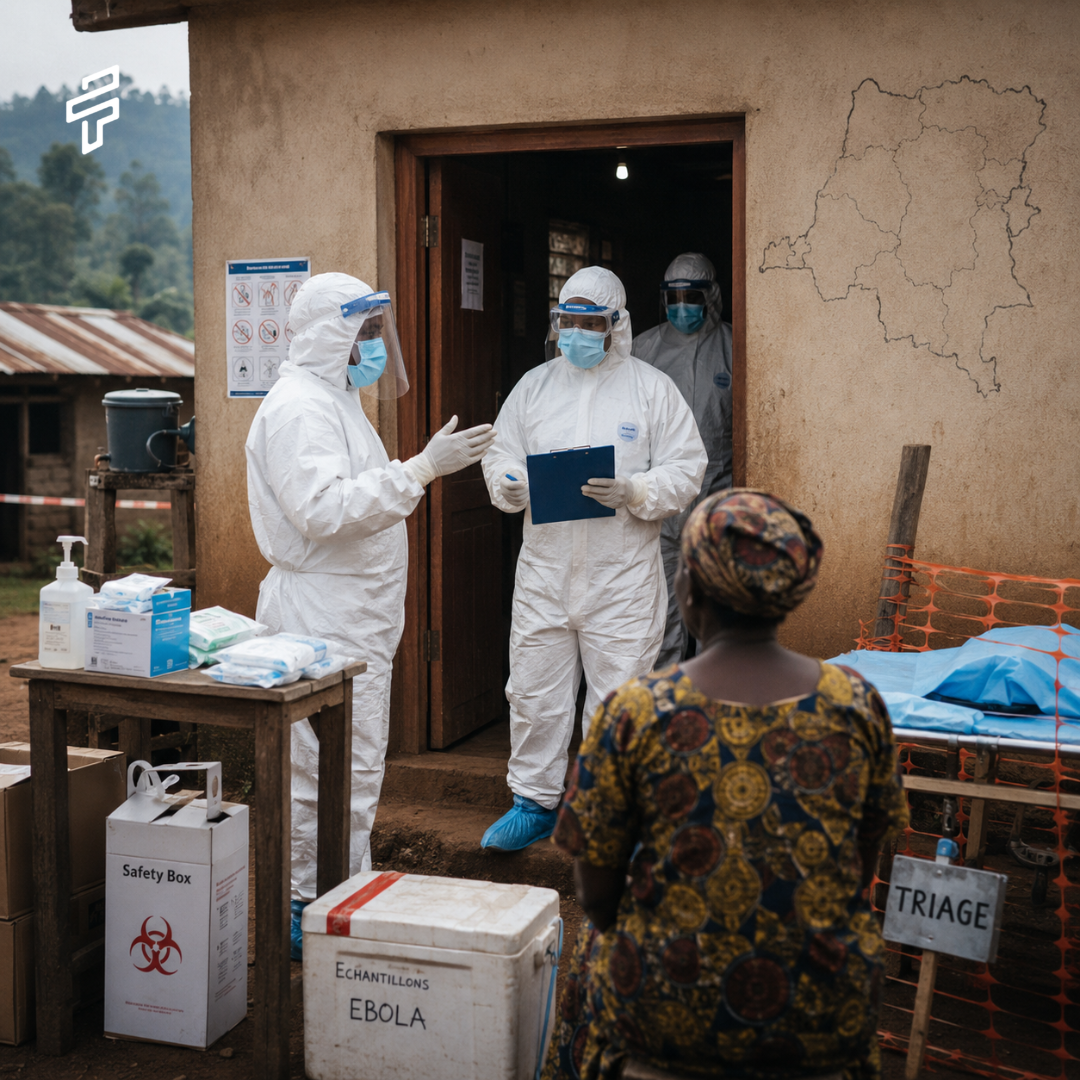
The Democratic Republic of Congo is facing a serious Ebola outbreak that has already spread to neighbouring Uganda, raising concern over the region’s ability to contain a fast-moving public health emergency. The World Health Organization says there have been at least 500 suspected cases and 130 suspected deaths, while limited testing capacity is slowing efforts to determine the true scale of the outbreak.
The outbreak involves the Bundibugyo strain of Ebola, according to WHO officials cited by Reuters. Six tons of medical supplies were due to arrive in Congo on Tuesday, adding to earlier shipments of protective equipment and sample collection materials. But WHO’s Congo representative, Anne Ancia, warned that there was still “great uncertainty” over the extent and scale of the outbreak, with surveillance, testing and contact tracing being expanded.
The immediate challenge is medical. Ebola requires speed: early testing, contact tracing, isolation, protective equipment and clear public messaging. When testing is slow, the outbreak can move faster than the response. That risk is especially serious in eastern Congo, where insecurity, displacement, weak infrastructure and mistrust of authorities have repeatedly complicated health interventions.
The regional dimension is now unavoidable. The spread to Uganda means this is no longer only a Congolese crisis. It places pressure on cross-border surveillance, health screening, community-level reporting and coordination between national authorities and international agencies. In a region where people, trade and insecurity move across borders, public health cannot be managed as a purely domestic issue.
The outbreak also arrives at a difficult moment for humanitarian systems. Congo is already dealing with conflict in the east, displacement, mineral-sector insecurity and pressure on state authority. A major Ebola response will require resources, discipline and trust at a time when all three are already stretched.
The danger is not only the number of suspected cases. It is the possibility that weak testing, limited access and regional mobility allow the outbreak to widen before the full map of transmission is understood. For Kinshasa, Kampala and the WHO, the priority is now containment before uncertainty becomes acceleration.