
Zimbabwe’s First Lithium Sulphate Export Marks a Test for Africa’s Battery Minerals Ambition
Zimbabwe’s move from raw lithium concentrate toward processed lithium sulphate is a strategic milestone, but Chinese dominance and policy consistency will shape whether value addition benefits the wider economy.

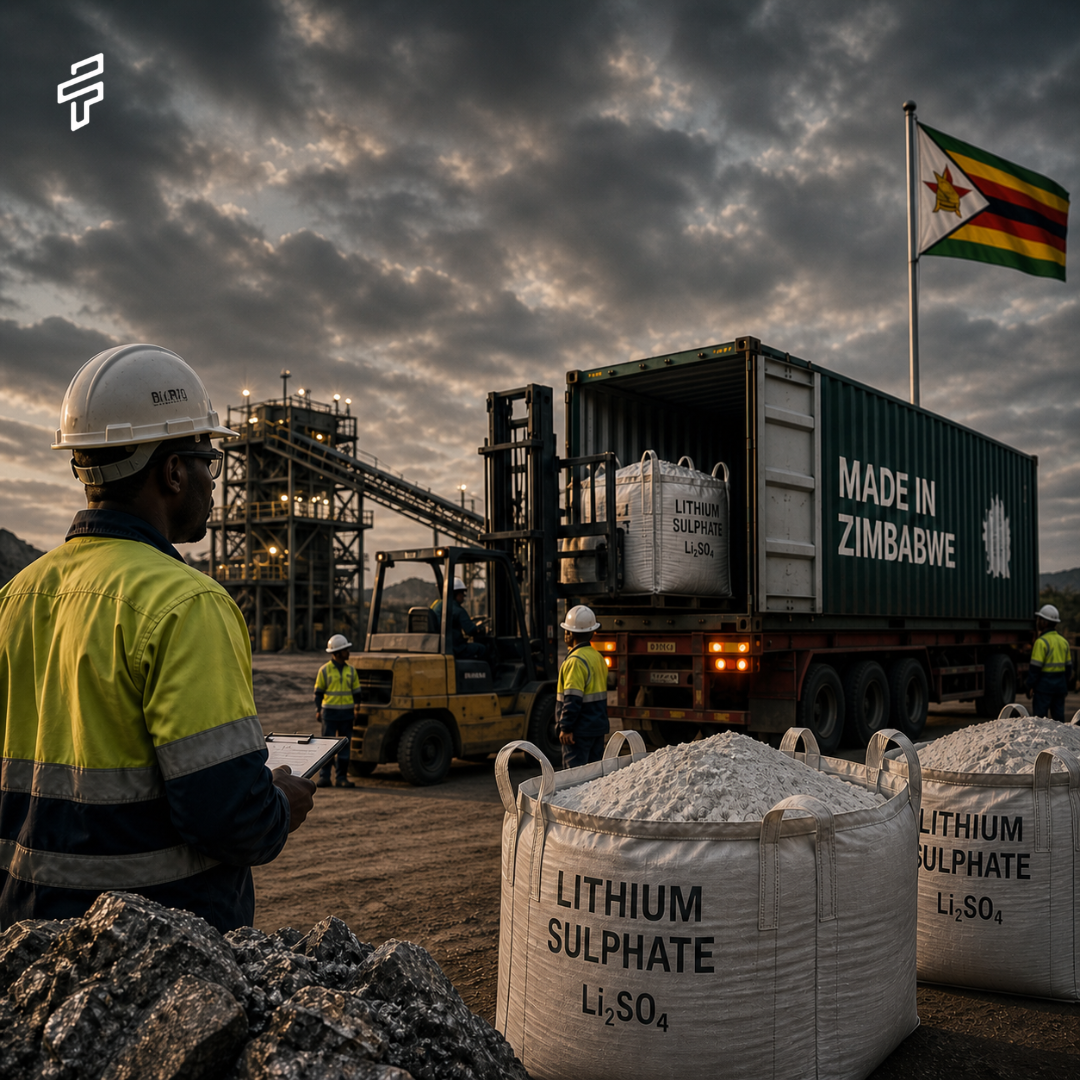
Zimbabwe has exported its first shipment of lithium sulphate, a higher-value intermediate product used in battery supply chains. Reuters reported that China’s Zhejiang Huayou Cobalt announced the first export from its Zimbabwe operation, marking a milestone for both the company and Africa’s lithium industry.
The shipment follows Zimbabwe’s push to reduce raw lithium exports and force more processing inside the country. Harare suspended lithium concentrate exports in February 2026 over concerns about export practices, introduced stricter compliance conditions and plans to ban lithium concentrate exports from January 2027.
Huayou’s $400 million processing plant, commissioned in October 2025, has an annual capacity of 50,000 metric tons. Reuters reported that the exported lithium sulphate is not covered by Zimbabwe’s 10% tax on lithium concentrate exports, creating an incentive for higher-value processing.
The policy reflects a wider African frustration: countries rich in critical minerals often capture too little value from global supply chains. Zimbabwe wants to position itself not only as a source of ore, but as a processing hub for battery minerals.
There are limits. Chinese companies including Huayou, Sichuan Yahua, Chengxin Lithium and Sinomine dominate Zimbabwe’s lithium sector. In 2025, Zimbabwe exported 1.13 million metric tons of spodumene concentrate to China, about 15% of China’s imports of the material.
That dominance is not automatically negative, but it raises the central question: who captures the value? Processing plants can support export earnings and skilled work, but only if local firms, workers and public institutions are integrated into the chain.
Zimbabwe’s first lithium sulphate shipment is therefore a genuine milestone, but not yet a transformation. The transformation will depend on whether industrial policy can outlast commodity cycles, investor pressure and political short-termism.