
Ghana nears IMF programme exit after returning to long-term bond markets for the first time since 2022
Ghana’s return to the long-dated domestic bond market is a concrete signal that investor confidence has been sufficiently rebuilt to support normal sovereign financing. It is also a reminder of how far the country fell — and how much remains to be done.
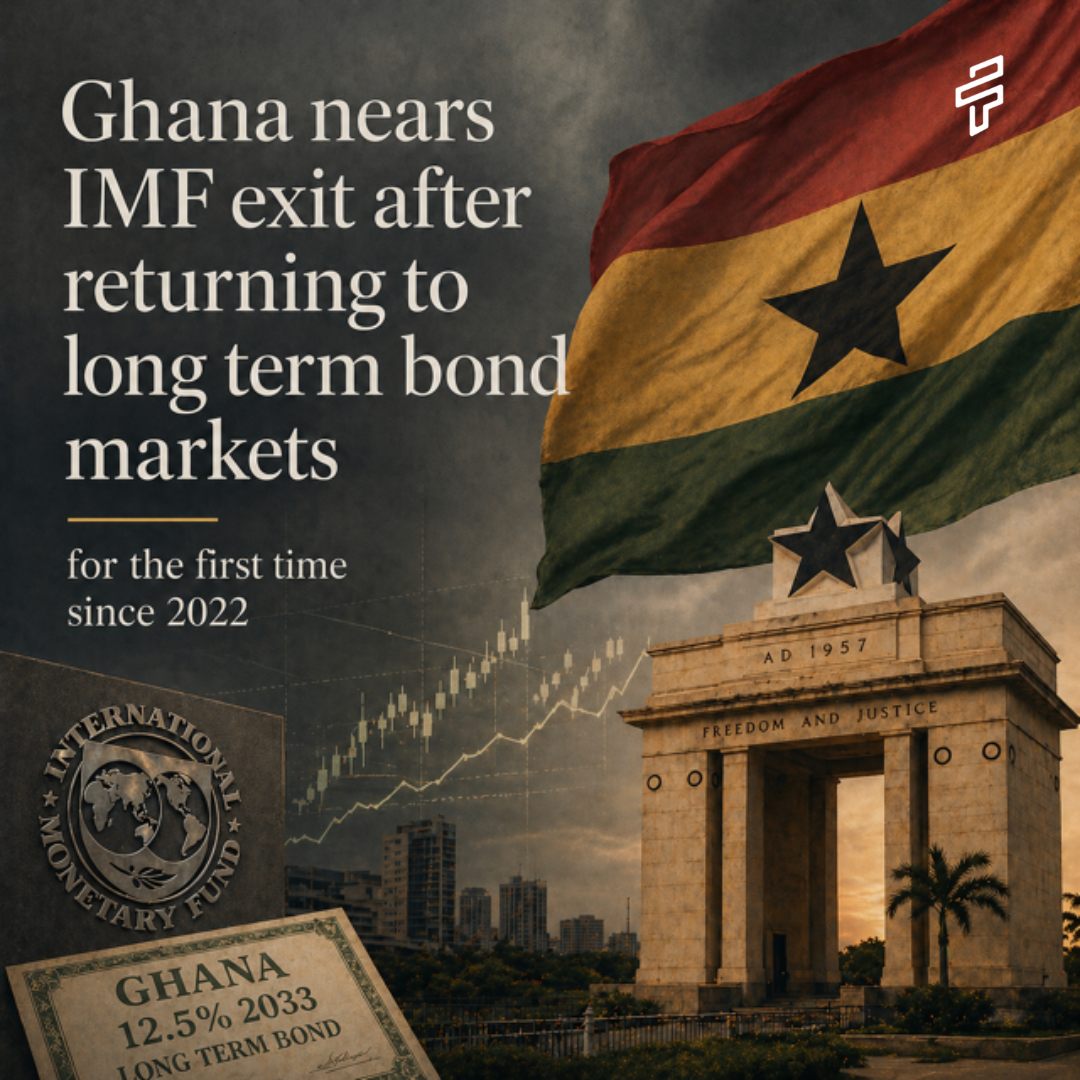
Ghana has raised GH¢2.7 billion through its first long-dated domestic bond issuance since the 2022-23 debt crisis, in a sign that the country is regaining access to local capital markets.
The seven-year bond, issued in April 2026, marks a return to longer-term borrowing after the Debt Exchange Programme and comes as President John Dramani Mahama’s government prepares to exit the IMF Extended Credit Facility programme.
Analysts say the transaction is significant because it extends debt maturities, reduces rollover risk and shows that local investors are willing to buy sovereign paper again. Banks and pension funds, which took losses in the restructuring, were among the institutions that re-engaged.
Ghana’s recovery has also been supported by progress under the IMF programme. The Fund’s fifth review, completed in December 2025, found that the country met all quantitative performance criteria. It recorded a primary surplus, inflation moved back within target, the cedi strengthened and reserves improved on the back of strong gold and cocoa exports.
The economy is now projected to grow by 4.8 percent in 2026, while inflation has eased sharply from its 2022 peak. At the Spring Meetings in Washington this month, Finance Minister Cassiel Ato Forson also received public praise from World Bank officials.
But risks remain. The IMF expects debt to rise to 53 percent of GDP by the end of 2026, while the cocoa sector remains under strain after two weak seasons. Cocoa accounts for about 10 percent of export revenue and supports roughly 800,000 farming households.
Ghana still has unfinished external debt restructuring work, including remaining bond talks. The new bond issue is an important recovery signal, but it does not mark the end of the country’s financing challenges.