
Museveni’s Seventh Term Extends Uganda’s Succession Question Into a Fifth Decade
Museveni’s seventh term strengthens continuity in Kampala, but succession politics and opposition pressure remain unresolved.
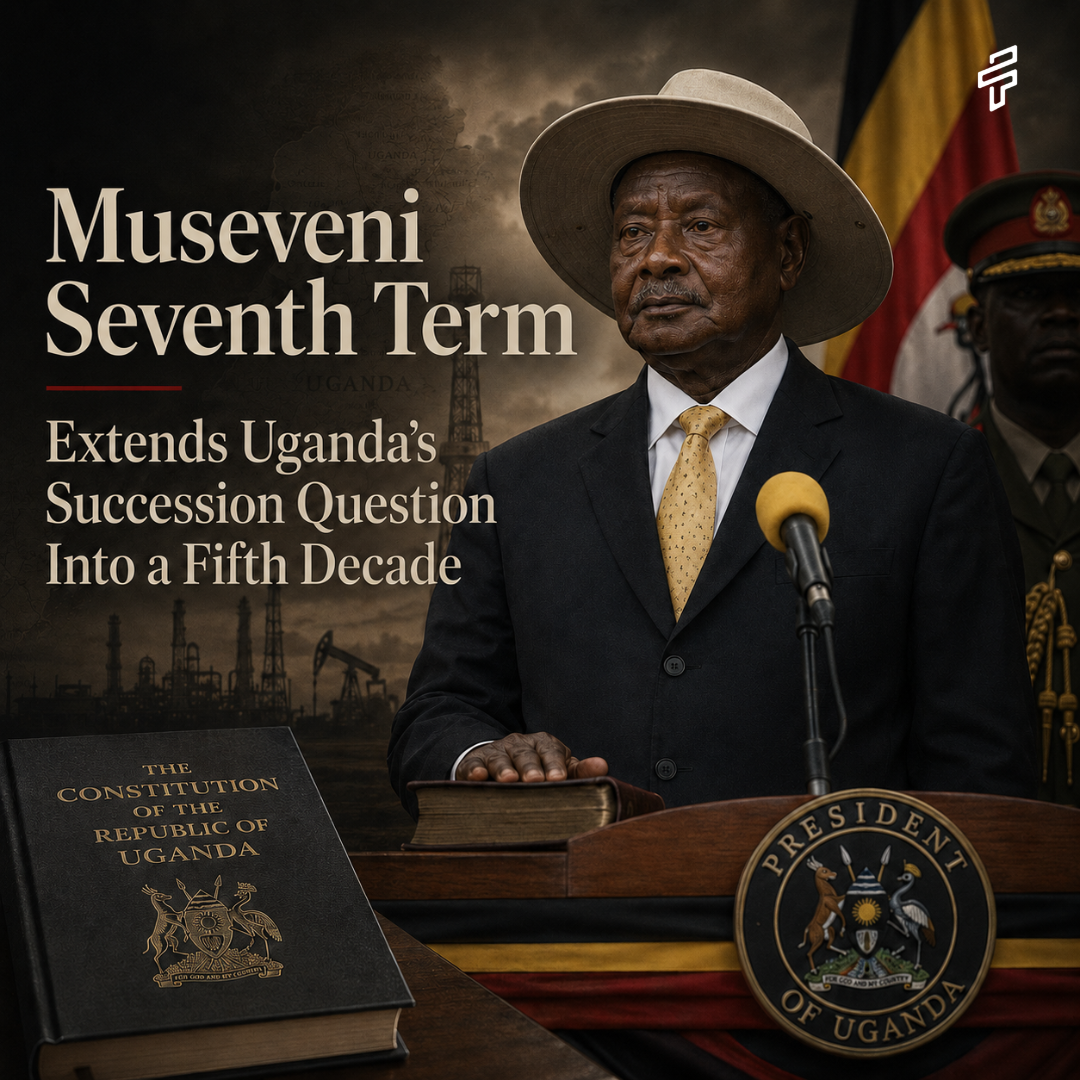
Ugandan President Yoweri Museveni has been sworn in for a seventh term, extending his rule into a fifth decade. The 81-year-old former guerrilla leader was declared winner of January’s election with 72% of the vote after a contest Reuters described as marred by violent incidents and allegations of fraud.
Museveni used his inaugural speech to emphasise his economic record since taking power in 1986. Uganda’s economy is expected to reach double-digit growth in the upcoming fiscal year as crude oil production begins, according to Reuters.
But the political question remains succession. Speculation continues over whether Museveni favours his son, military chief Muhoozi Kainerugaba, as his eventual successor, although the president has denied grooming him.
The opposition landscape is also constrained. Bobi Wine, Museveni’s main challenger in the last two elections, is in exile in the United States after fleeing a military raid on his home following the vote.
Uganda’s next phase will therefore be shaped by two competing narratives. The government will argue continuity, oil-led growth and regional security. Critics will point to electoral pressure, civic restrictions and an increasingly personalised political system.
The oil economy could give Museveni’s government new fiscal room. But resource-led growth does not automatically resolve political succession. In fact, it may raise the stakes by making control of the state even more valuable.
Museveni’s seventh term confirms that Uganda’s political system remains built around the president. The challenge for the country is whether institutions can outgrow that arrangement before succession becomes a crisis.