
Congo’s Health Misinformation Crisis Shows How Rumours Can Kill
A fake illness rumour in northern Congo led to mob attacks on health workers, exposing how mistrust, social media and aid cuts are weakening public-health systems.
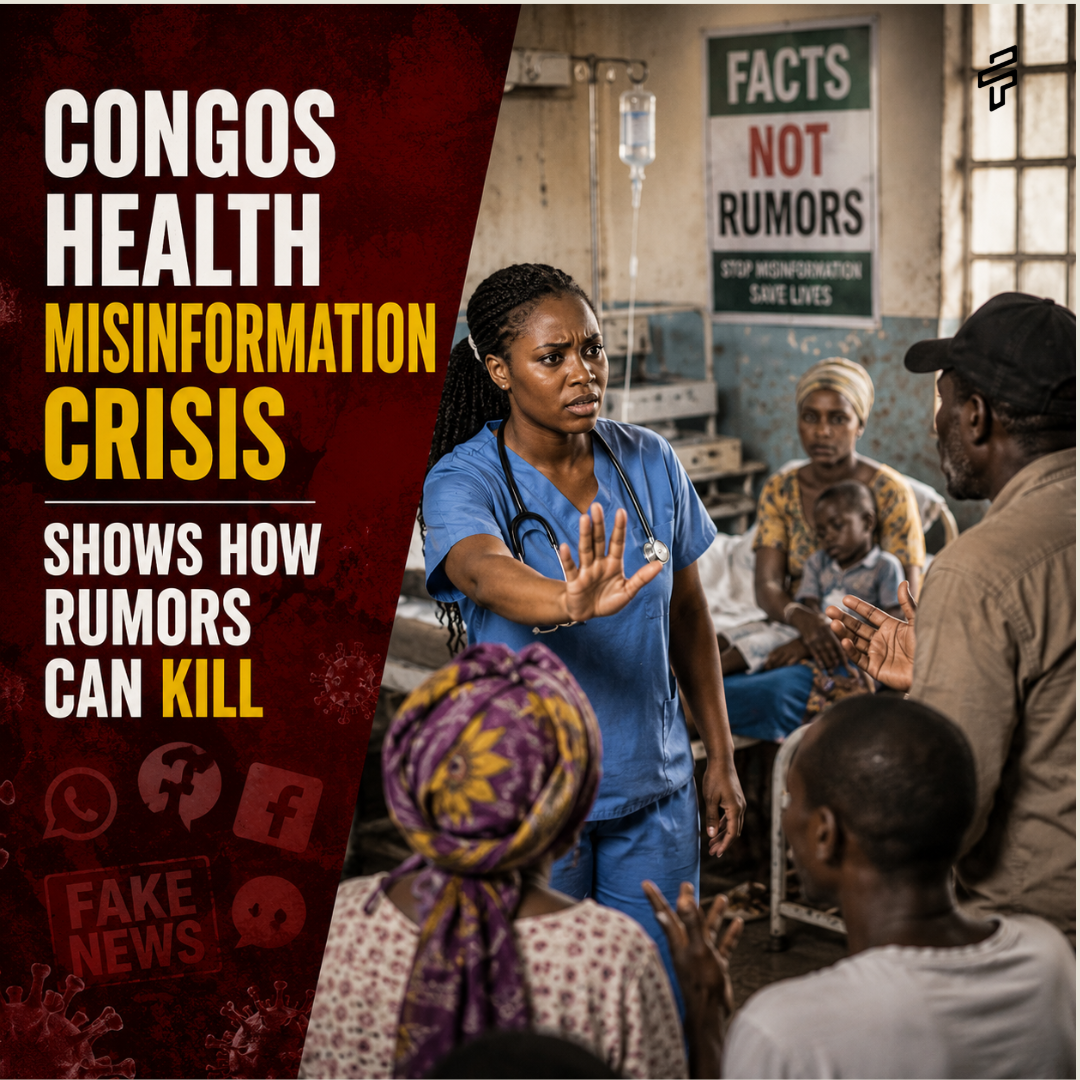
A false health rumour in the Democratic Republic of Congo has turned deadly, after claims of a mysterious illness spread through villages and social media in Tshopo province. Reuters reported that angry mobs attacked and killed four health workers conducting vaccination research in October after online testimonials amplified the imaginary threat.
The violence did not end there. According to the WHO-led Africa Infodemic Response Alliance, at least 17 killings linked to the rumour have been reported, including the health workers. Reuters said it could not independently verify all of the deaths.
The rumour claimed that a mysterious illness caused men’s genitals to atrophy. Local officials investigated claims by alleged victims and found no evidence that the illness was real. But by the time authorities responded, social media, local media and church-linked testimonies had already helped spread panic.
The case shows how digital misinformation can become physical violence. Reuters found that some church figures and worshippers claimed prayer had cured alleged victims, while videos circulated widely online. One video posted on Facebook had more than 300,000 views.
Africa CDC has warned that misinformation is a top public-health threat on the continent. Its Director General, Jean Kaseya, said false information keeps people away from life-saving services, including vaccines and treatment.
The problem is worsened by funding cuts. Reuters reported that AIRA, the WHO-led body monitoring health misinformation, has lost capacity after foreign aid reductions, with an AI platform for tracking online conversations out of action because subscriptions cannot be funded.
Congo’s crisis is a warning for governments across Africa. Public health now depends not only on clinics, vaccines and doctors, but on trust, local communication and the ability to respond quickly when falsehoods move faster than institutions.