
Nigeria Faces Calls for Investigation After Amnesty Reports 150 Deaths in Kwara Camp
Amnesty International’s allegations of mass deaths among detained Fulani civilians in Kwara have placed Nigeria’s security response under renewed scrutiny, even as the military denies the claims.
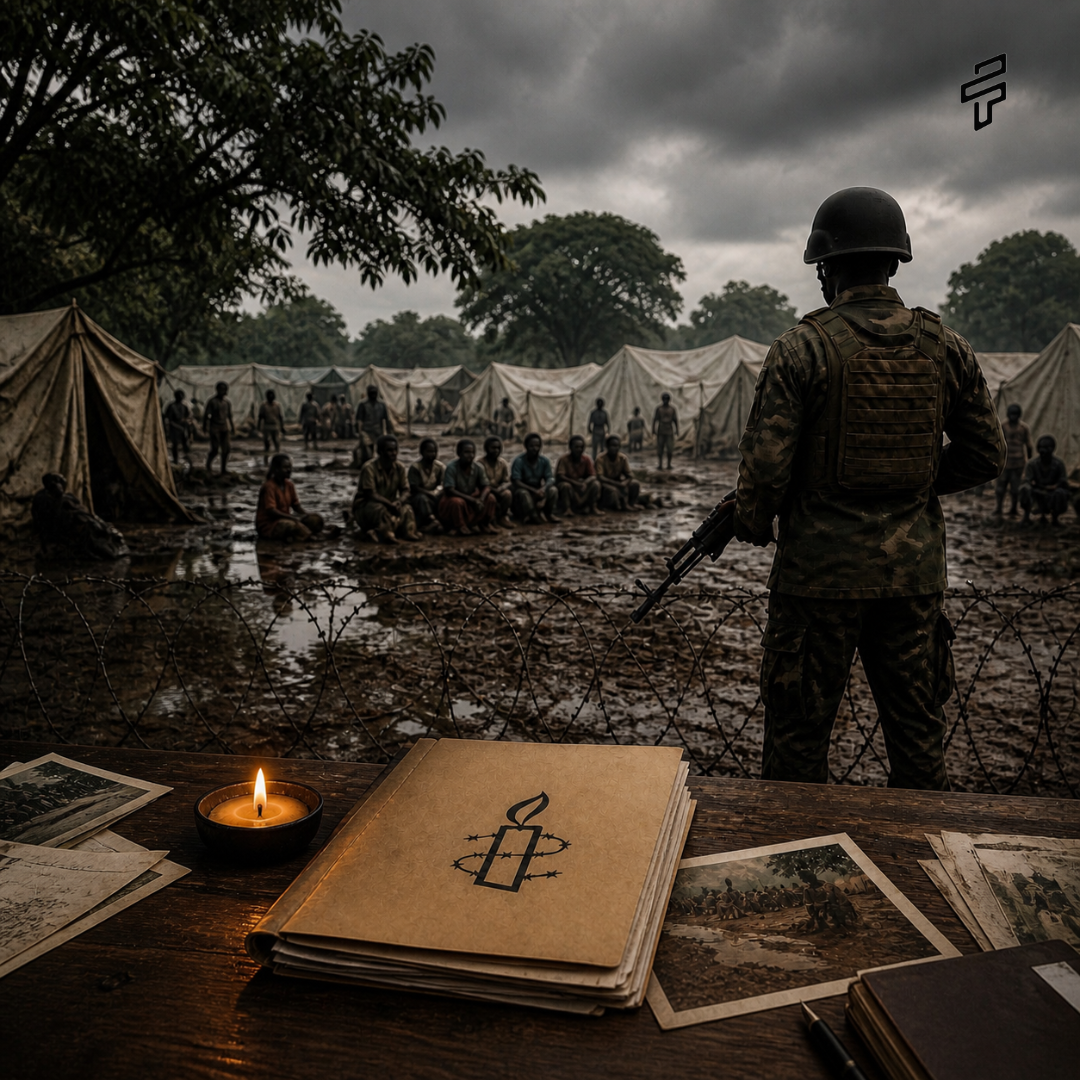
Amnesty International has urged Nigerian authorities to investigate reports that at least 150 people, most of them children, died in a camp in Yikpata, Kwara state, where the group says Fulani civilians had been arbitrarily detained. Reuters reported that Nigeria’s military rejected the allegations as baseless.
Amnesty said the detainees were among roughly 1,500 Fulani people held after fleeing violence from armed groups. The organisation alleged that overcrowding, unsanitary conditions, restricted movement, malnutrition and disease contributed to deaths in the camp.
Nigeria’s Defence Headquarters denied involvement in running the camp and said there was no verifiable evidence to support the allegations. Local Nigerian reporting also cited the military’s denial of any role in managing the facility.
The case is sensitive because it touches several volatile issues at once: Fulani displacement, expanding armed-group violence in north-central Nigeria, military conduct and civilian protection. Kwara has become more exposed to insecurity as violence spreads beyond Nigeria’s older conflict theatres in the north-east and north-west.
The burden now falls on the Nigerian state to establish the facts. If Amnesty’s allegations are accurate, the case would represent a serious failure of civilian protection and detention oversight. If the military’s denial is correct, a transparent investigation is still necessary to prevent rumours, ethnic suspicion and political manipulation from filling the vacuum.
The credibility of Nigeria’s security strategy depends not only on military pressure against armed groups, but on the state’s ability to protect civilians under its control. In a country where insecurity often travels with mistrust, accountability is not a secondary issue. It is part of security itself.