
What is happening in Mali?
Mali’s insurgency is no longer a remote northern rebellion or a contained counterterrorism problem. It has become a national crisis with implications for politics, mining,…

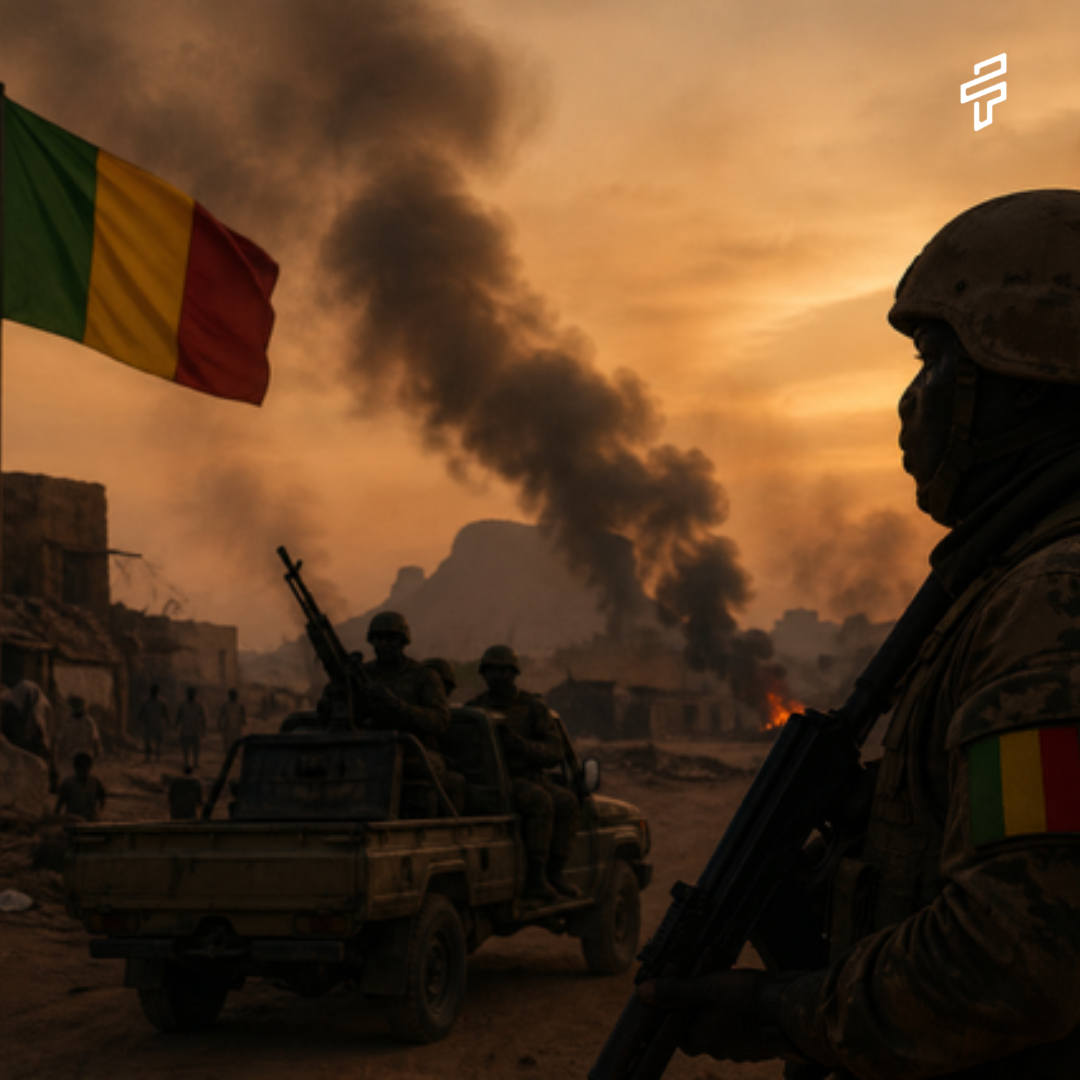
Mali’s insurgency is no longer a remote northern rebellion or a contained counterterrorism problem. It has become a national crisis with implications for politics, mining, logistics, humanitarian access, regional stability and foreign investment. The latest coordinated attacks across Bamako, Kati, Gao, Mopti, Sévaré and Kidal show that armed groups are no longer merely harassing the state from the margins; they are testing the centre of power itself. JNIM, al-Qaeda’s Sahel affiliate, claimed attacks around Kati and Bamako, while Tuareg rebels from the Azawad Liberation Front also claimed participation in the wider offensive. Reuters and Al Jazeera report that the attacks included military targets near the capital and sites in central and northern Mali, with Mali’s defence minister reportedly killed amid the violence.
The key development is coordination. Mali has long faced overlapping insurgencies: jihadist groups, Tuareg separatists, ethnic militias, criminal networks and local self-defence forces. What now worries analysts is the apparent convergence of pressure from JNIM and Tuareg-led forces. These groups do not share identical end goals: JNIM seeks Islamist governance across the Sahel, while Tuareg factions have historically pursued autonomy or independence for Azawad in northern Mali. But their tactical alignment against Bamako suggests a common interest in weakening the military government. That makes the conflict more unpredictable.
The roots of the crisis go back to 2012, when a Tuareg rebellion, jihadist expansion and a military coup shattered Mali’s fragile democratic order. Since then, the state has struggled to restore control across its vast northern and central regions. French forces intervened in 2013, the UN deployed MINUSMA, and regional partners backed counterterrorism efforts. But public frustration with insecurity helped pave the way for military takeovers in 2020 and 2021. Colonel Assimi Goïta’s junta promised to restore sovereignty and security, expelled French forces, pushed out the UN mission and turned towards Russia-linked security support.
That gamble has delivered mixed and increasingly costly results. Wagner, later replaced by Russia’s Africa Corps, helped Malian forces reclaim some strategic towns, including Kidal in 2023. But the wider insurgency adapted. JNIM expanded its reach, exploited rural grievances, targeted supply routes and deepened its influence in central and southern Mali. Human Rights Watch has also documented abuses by Malian forces and Russia-linked fighters, including killings and disappearances of civilians, particularly Fulani men accused of collaborating with jihadists. Such tactics may produce short-term military pressure, but they often deepen resentment and strengthen insurgent recruitment.
JNIM’s most effective weapon has not only been violence; it has been economic strangulation. Since late 2025, the group has targeted fuel tankers and transport corridors linking landlocked Mali to Senegal and Côte d’Ivoire. The blockade triggered fuel shortages in Bamako, disrupted electricity access, paralysed transport and forced temporary school closures. Al Jazeera reported that JNIM’s blockade brought Bamako close to breaking point, while Peace Insight described the fuel crisis as a turning point in the balance of power between the state and insurgents.
This matters for every industry because Mali’s crisis is now a supply-chain story. Fuel insecurity affects mining operations, food prices, telecoms, banking, transport, humanitarian delivery and government revenues. Mali is one of Africa’s major gold producers, and gold remains central to state income and foreign exchange. If armed groups can threaten roads, energy access and regional corridors, they can raise operating costs for miners, insurers, logistics firms and contractors. Even companies not directly operating in Mali should watch the precedent: insurgents across the Sahel are learning that targeting infrastructure and trade routes can be as politically powerful as capturing territory.
The humanitarian situation is also deteriorating. UNFPA reported renewed hostilities in February 2026, displacement towards Timbuktu and central regions, movement restrictions caused by improvised explosive devices and illegal checkpoints, and a critical siege situation in Léré threatening food security. The WHO-linked Health Cluster estimated in late 2025 that 6.4 million people, about 28% of Mali’s population, urgently needed humanitarian assistance, with insecurity spreading southward and undermining basic services.
Politically, the junta is under severe pressure. Its central claim to legitimacy has been security. If insurgents can strike near Bamako, disrupt fuel supplies and coordinate with northern rebels, the government’s core promise looks weaker. The regime has also narrowed civic space: Human Rights Watch reported that in 2025 Mali’s junta banned political parties, elevated Goïta as president until 2030 without elections, and continued restricting media and dissent. This means there are fewer peaceful outlets for political frustration, increasing the risk that instability becomes both military and social.
Regionally, Mali’s conflict is part of a wider Sahelian breakdown. Burkina Faso and Niger face similar jihadist expansion, military rule and strained relations with Western partners. The three states left ECOWAS and formed closer security ties under the Alliance of Sahel States. But sovereignty rhetoric has not yet translated into durable security. If Mali weakens further, pressure will rise on Senegal, Mauritania, Côte d’Ivoire and Guinea, especially through refugee flows, smuggling routes and cross-border militant movement.
The central lesson is uncomfortable: Mali cannot shoot its way out of this crisis. A military response is necessary against groups capable of mass violence, but counterinsurgency without governance reform is a treadmill. The state must protect civilians, reopen political channels, rebuild local trust, secure roads and negotiate where tactical deals can reduce violence without surrendering national authority. For investors, diplomats and humanitarian actors, Mali should now be treated as a high-risk operating environment where security, logistics and politics are inseparable.
The insurgency’s message is clear: Bamako is no longer beyond reach. The question is whether Mali’s rulers can move beyond regime survival and rebuild a state that Malians are willing to trust.